
As 2025 came to a close, homebuyer behavior continued to reflect a market defined by caution, longer decision cycles, and intentional engagement. Q4 data from LenderLogix shows fewer loan applications overall, but a steady base of highly active shoppers who remained deeply engaged across pre-approval, application, and document collection.
The defining characteristic of today’s homebuyer is not hesitation, but selectivity. Borrowers are taking more time, running more scenarios, and moving forward with greater intention rather than pulling back entirely.
Pre-Approval Activity Shows Fewer Shoppers, Stronger Engagement
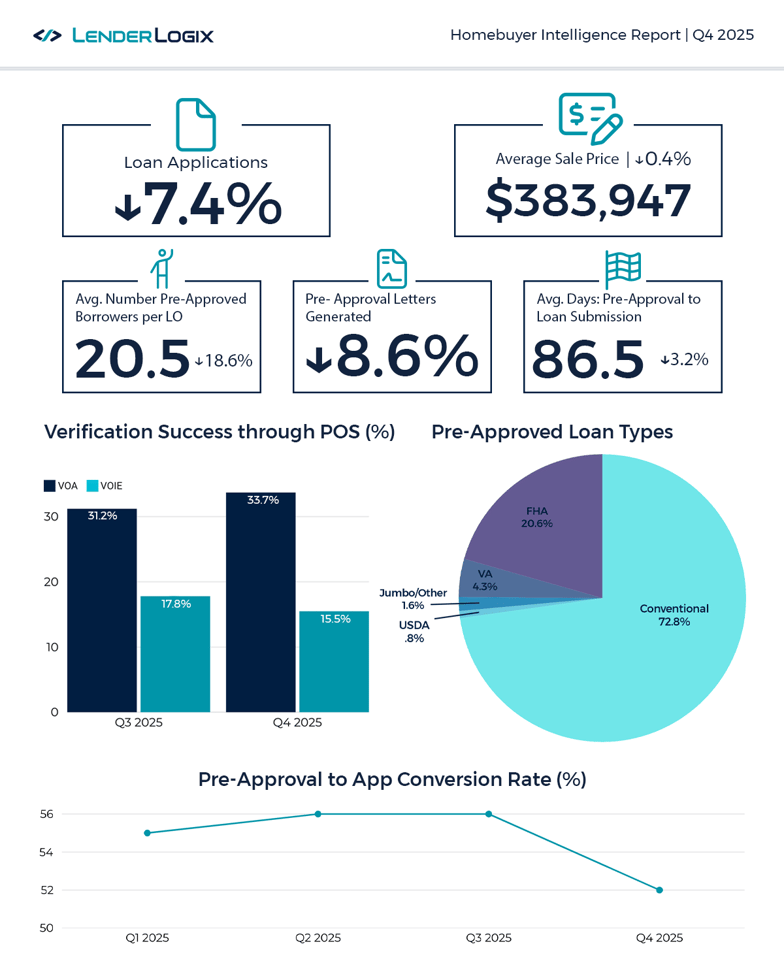
Pre-approval letter generation by borrowers decreased 8.6% from the previous quarter in Q4 2025. While overall letter volume declined, borrower behavior suggests increased intentionality. On average, each borrower logged into QuickQual 6.5 times during the quarter, indicating sustained, intentional engagement as users evaluated multiple scenarios and price points over time.
This shift placed more focus on active relationships between loan officers and qualified shoppers.The average number of pre-approved borrowers per loan officer was 20.5 in Q4, down from 25.2 in Q3. Even with fewer buyers entering the funnel, loan officers were working with a more concentrated and engaged pool of borrowers.
Financial Profiles Reflect Disciplined Buying Power
Q4 borrowers continued to approach the market with measured expectations and disciplined financial profiles. The average maximum monthly payment settled at $3,027, while average maximum total cash reached $184,023. Average mortgage amounts came in at $328,137, alongside an average sale price of $383,947, down slightly (0.4%) from Q3.
Down payments averaged approximately 14.5%, reinforcing that while affordability remains a concern, buyers entering the market were financially prepared and realistic about their purchasing power.
Longer Decision Cycles Shape Conversion Trends
The time between pre-approval and loan application shortened slightly in Q4. On average, borrowers took 86.5 days to move from pre-approval to application, down from 89.5 days in Q3, representing a 3.2% quarter over quarter decrease. This aligns with broader market behavior, where buyers are spending more time evaluating inventory, rates, and monthly payment scenarios before committing.
The QuickQual-to-loan application conversion rate held at 52% in Q4. Converting borrowers averaged approximately 7.8 pre-approval letters before submitting an application.
In some cases, the path from pre-approval to approval stretched significantly, with the longest observed timeline reaching 660 days, underscoring how extended shopping cycles have become part of the modern homebuying experience.
Conventional Loans Continue to Anchor Borrower Demand
Loan type distribution in Q4 remained consistent with prior quarters, with conventional financing continuing to dominate pre-approval activity:
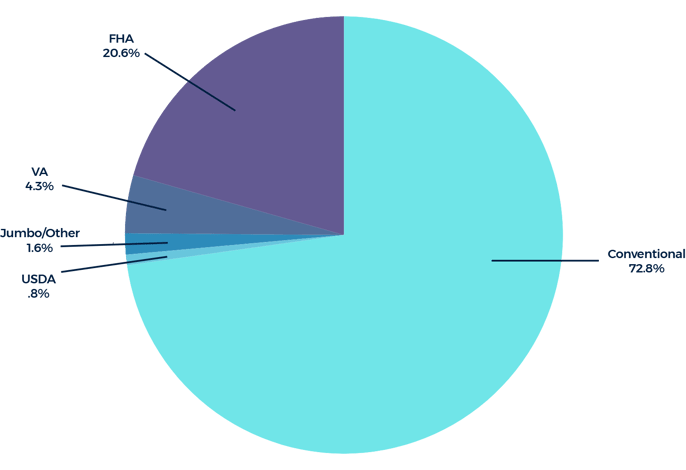
This mix highlights the ongoing importance of conventional products, while FHA and VA loans continue to serve key affordability-driven segments of the market.
Application and Verification Activity Remain Strong
While overall loan applications declined 7.4% quarter over quarter, engagement accelerated once borrowers entered the application phase. LiteSpeed saw steady application activity in Q4, alongside ongoing document uploads and Needs List creation, signaling sustained operational momentum.
Verification success through the POS continued to improve, with 33.7% of VOAs and 15.5% of VOIEs completing successfully. These gains signal growing borrower adoption of digital verification workflows and highlight opportunities to further streamline the application process.
What This Means for Lenders Heading Into 2026
Q4 2025 reinforces a clear market reality: today’s buyers are not rushing, but they are engaged. Fewer shoppers are entering the funnel, yet those who do are spending more time evaluating options, interacting more frequently with digital tools, and moving forward only when the path feels sustainable.
For lenders, success in 2026 will depend on supporting longer decision cycles while reducing friction at every step. Tools that enable scenario flexibility, transparent fee collection, and efficient verification will play a critical role in keeping engaged buyers moving forward when they are ready to act.